The Operational Calendar of Vôrun-Hold


The Operational Calendar of Vôrun Hold
Time, Shadow, and the Working Sky Above Hypnoth
Vôrun Hold does not keep time for comfort. It keeps time for survival.
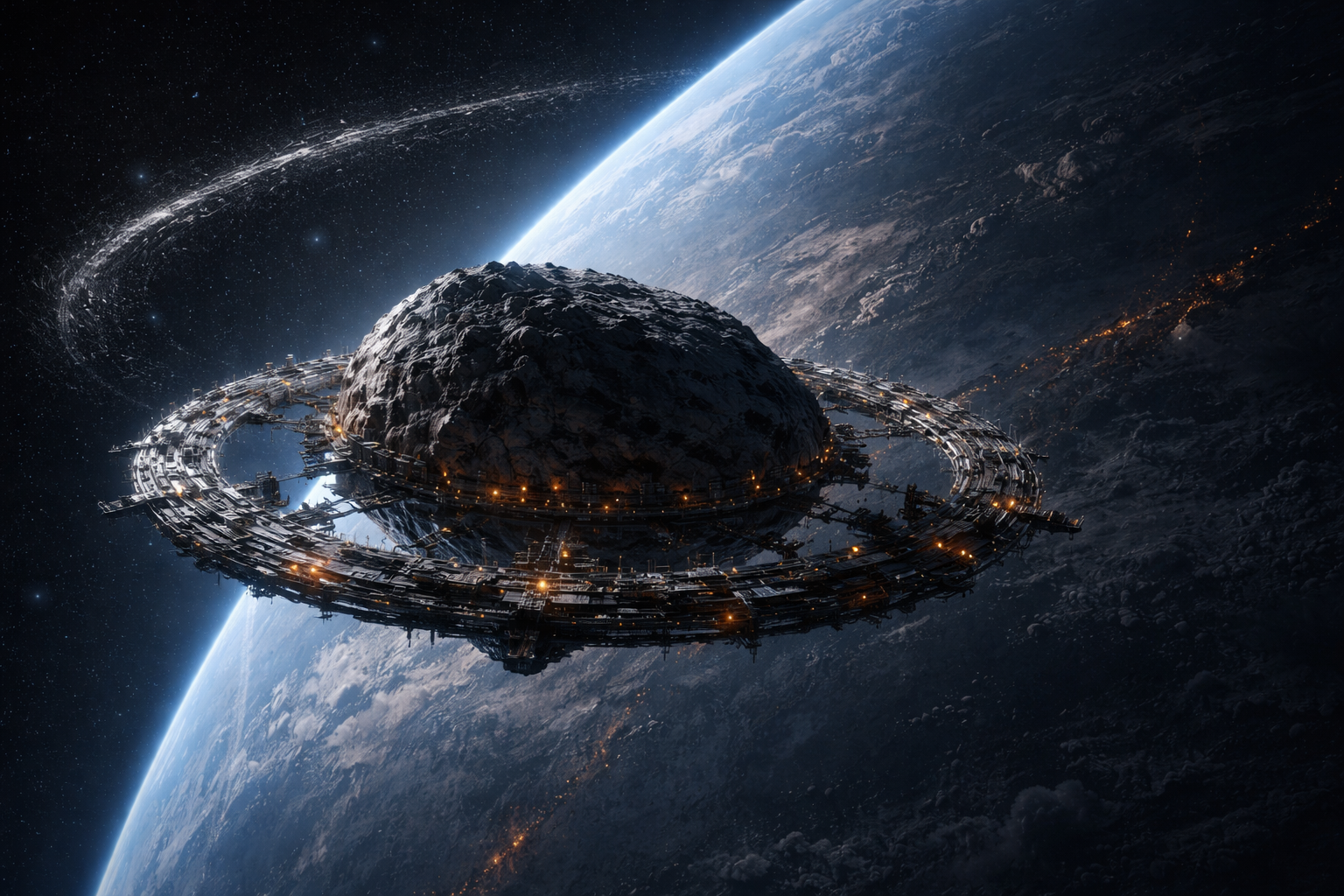
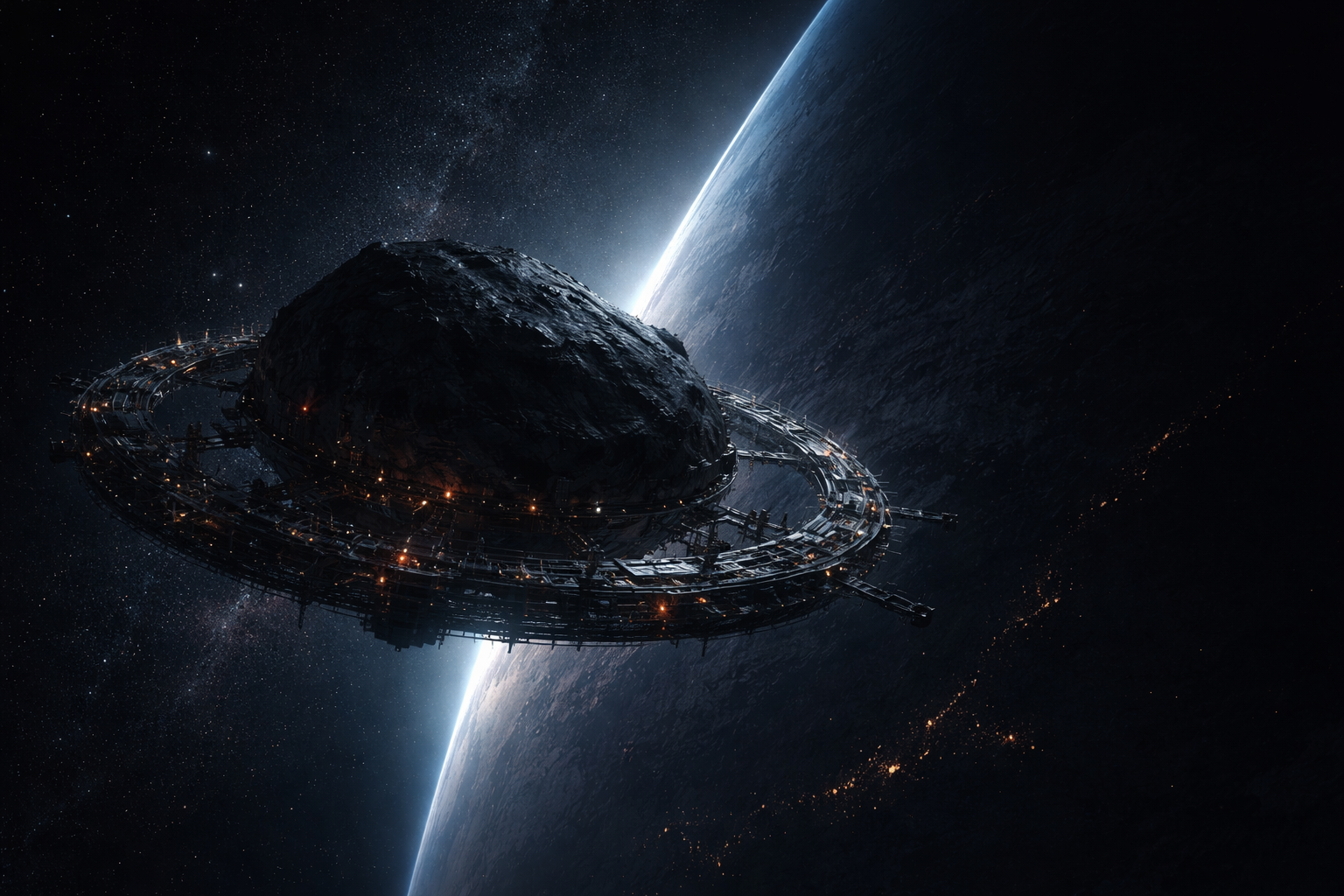
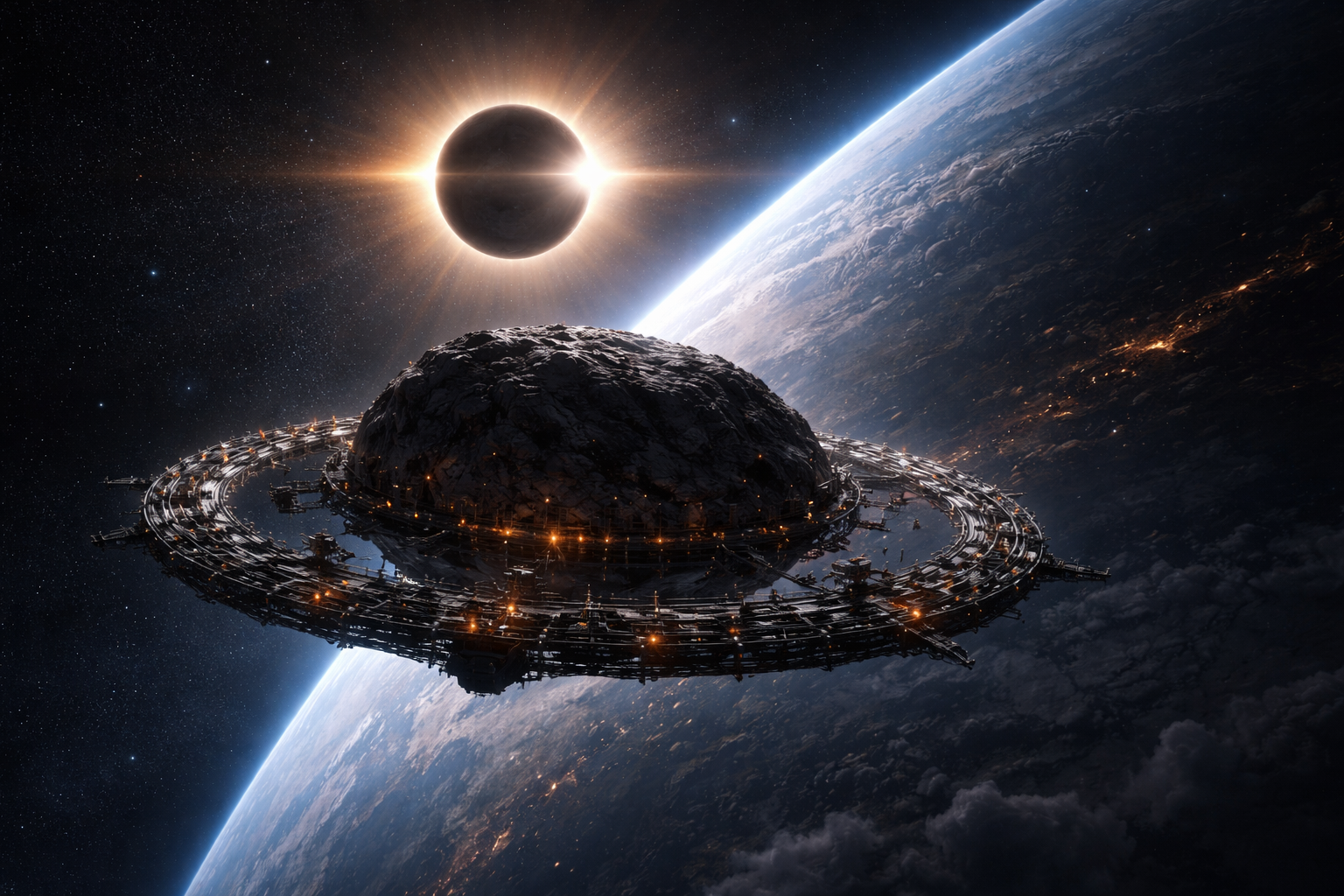
Its calendar is not built around harvests, saints, or civic festivals, but around shadow, load, orbit, and return. The Hold turns above Hypnoth in a rhythm shaped by its own path, by the world below, by the two surviving moons above, and by the Arc — the debris scar of lost Tertius — which makes the sky as much a working condition as any dock, shaft, or furnace line. Most Kin do not watch the heavens for beauty. They watch them for information.
Because Vôrun-Hold is an 80 km asteroid station orbiting Hypnoth at 35,000 km, it circles the world once every 14.3 hours. Hypnoth itself rotates every 10 hours and completes its year in 257.32 Terran days. Shepherd, the inner moon, orbits at 60,000 km every 32.1 hours. The outer irregular moon circles at 250,000 km every 11.4 days. These are the mechanical bones of the system, and any Vôrun calendar worth the name is built on them.
The Hold Cycle
The most immediate unit of time aboard Vôrun is the Hold Cycle: one complete orbit of the station around Hypnoth.
Length: 14.3 hours
Definition: one full orbit of Vôrun-Hold at 35,000 km altitude.
This is the core clock of daily life aboard the Hold. Shift changes, docking windows, maintenance runs, salvage dispatches, cooling budgets, continuity checks, and industrial prioritisation all align against it. Because the Hold’s orbit is shorter than a standard Terran waking day and longer than a simple labor watch, it produces a rhythm that feels distinct from both groundside timekeeping and off-world habit. For Vôrun, that is normal. Time is what the structure must answer to.
Shadow-Shift
Once each Hold Cycle, Vôrun passes behind Hypnoth and enters the planet’s shadow.
Frequency: once every 14.3 hours
Duration: approximately 55 minutes.
This interval is called Shadow-Shift.
It is one of the most important recurring conditions in the life of the Hold. Solar input drops. External visibility changes. Power and thermal priorities tighten. For a station designed around continuity, this is not crisis but expectation. Shadow-Shift is not romantic darkness. It is scheduled austerity.
Many crews use it instinctively as a marker in the cycle, much as surface cultures might use dusk. But on Vôrun it is not a softening hour. It is when the station proves its discipline.
The Hypnoth Day
Although Vôrun’s orbital cycle governs life aboard the Hold, the world below keeps its own older measure.
Hypnoth rotation: 10.0 hours.
This fast day matters most for surface crews, descent schedules, light conditions, and long-range observation planning. A salvage team on Hypnoth can move from hard dawn to black night and back again far faster than most off-worlders expect. Ground operations, especially in open country like the Ash Dorsae or the Glass Meridian, must treat light as a rapid and shifting operational constraint.
In a full Hypnoth year, the planet turns approximately 617 times on its axis.
The Hypnoth Year
Hypnoth completes one orbit around the system’s K-dwarf primary in:
1 Hypnoth year = 257.32 Terran days.
During that same span, Vôrun-Hold completes approximately 431 Hold Cycles.
This means the Hold experiences hundreds of its own orbital work-days while the world below completes a single year. In practical terms, Vôrun culture is closer to orbital recurrence than to agricultural seasonality. The large-scale year still matters — for archives, broader planning, fleet logistics, and some salvage expectations — but daily life is governed far more by the Hold Cycle and the changing geometry of planet, moons, and ring.
Shepherd
The blade moon in the calendar
Shepherd is the inner moon of Hypnoth and the most operationally important body in the sky after the planet itself.
Orbital radius: 60,000 km
Diameter: ~220 km
Orbital period: ~32.1 hours.
Because the archive is canon, this figure should be fixed at 32.1 hours, not 17. Earlier calendar language can be understood as a pre-revision working estimate, but the true ephemeris belongs to the archive.
Shepherd matters because it is near enough to influence perception, timing, and transit conditions in ways crews cannot ignore. It is also the moon most visibly entangled with the Arc, making its crossings one of the defining sights of the Hypnoth system.
Canon note
Earlier Vôrun working calendars preserved a pre-revision estimate for Shepherd’s cycle. Archive ephemerides now fix the moon’s orbital period at approximately 32.1 hours.
Shepherd’s Cut
One of the most distinctive events in the Vôrun calendar is Shepherd’s Cut.
From the Hold’s perspective, when Shepherd transits the primary star, its apparent size is large enough to dim the star by roughly 70% for about 4 minutes. The archive notes that this occurs two to four times per Hypnoth year, depending on geometry and season within the orbital cycle.
This gives Shepherd’s Cut an unusual place in the calendar: it is brief, rare, measurable, and memorable. It is exactly the sort of event Vôrun would notice and preserve — not because it is mystical, but because it converts astronomy directly into condition.
For most crews it is not a disruption. For those who work by light, surface visibility, sensor return, or precise alignment, it is a sky-state that must be logged and remembered.
The Outer Irregular Moon
The Far Moon in the calendar
Beyond Shepherd lies the outer moon, listed in the archive simply as Moon II – Irregular.
Orbital radius: 250,000 km
Orbital period: ~11.4 days
Orbital eccentricity: ~0.2.
Like Shepherd, this figure should now be corrected to the archive value. Earlier calendar text listing ~10.5 days should be replaced by the canonical ~11.4 days.
The Far Moon does not shape each shift the way Shepherd does, but it matters on longer intervals: convoy timing, route-house reckoning, broader orbital planning, and the visual depth of the system. It belongs to patience rather than immediacy.
The Arc
The sky as condition
No calendar of Vôrun is complete without the Arc.
The Arc is the long-lived debris ring left behind when Hypnoth Tertius, once orbiting at 95,200 km in 2:1 resonance with Shepherd, was driven into catastrophic tidal disruption. The archive gives the resulting persistent ring mass at roughly 10¹⁸ to 10¹⁹ kg, with long-term survival on timescales of 10⁷ to 10⁸ years under shepherding.
For calendar purposes, the Arc matters because it changes light, orientation, and perception. It is not just scenery. It alters the feel of night on Hypnoth, affects visibility over different sectors, and shapes how crews interpret conditions at a glance.
A Vôrun calendar is therefore never purely numeric. It is also observational. Ring-bright nights, bad light over open ash, and Shepherd crossings through the Arc all have meaning because the sky is part of work.
Annual Rhythm on Vôrun
A useful operational summary of the system looks like this:
1 Hold Cycle = 14.3 hours
1 Shadow-Shift = once per Hold Cycle, lasting about 55 minutes
1 Hypnoth day = 10.0 hours
1 Shepherd orbit = 32.1 hours
1 Far Moon orbit = 11.4 days
1 Hypnoth year = 257.32 Terran days
1 Hold-year equivalent = about 431 Hold Cycles
1 Hypnoth year total = about 617 planetary rotations.
Corrected Summary Table
Cycle
Event
Every 14.3 hours
Hold Cycle completed
Every 14.3 hours
Shadow-Shift
Every 32.1 hours
Shepherd completes an orbit
Every 11.4 days
Outer irregular moon completes an orbit
Two to four times per year
Shepherd’s Cut
Every 257.32 days
Hypnoth year completed
What the Calendar Says About Vôrun
The most important thing about the Vôrun calendar is not the numbers. It is the mindset they imply.
This is a people who live by orbital truth. Their units of time are shaped by shadow, load, moon-crossing, and the tolerances of a station that cannot afford carelessness. They do not watch the sky for beauty first. They watch it for consequence.
That is why the calendar matters. It tells you what kind of civilization Vôrun-Hold is.
Not one that waits for the heavens to bless it.
One that measures them, endures them, and keeps working.